
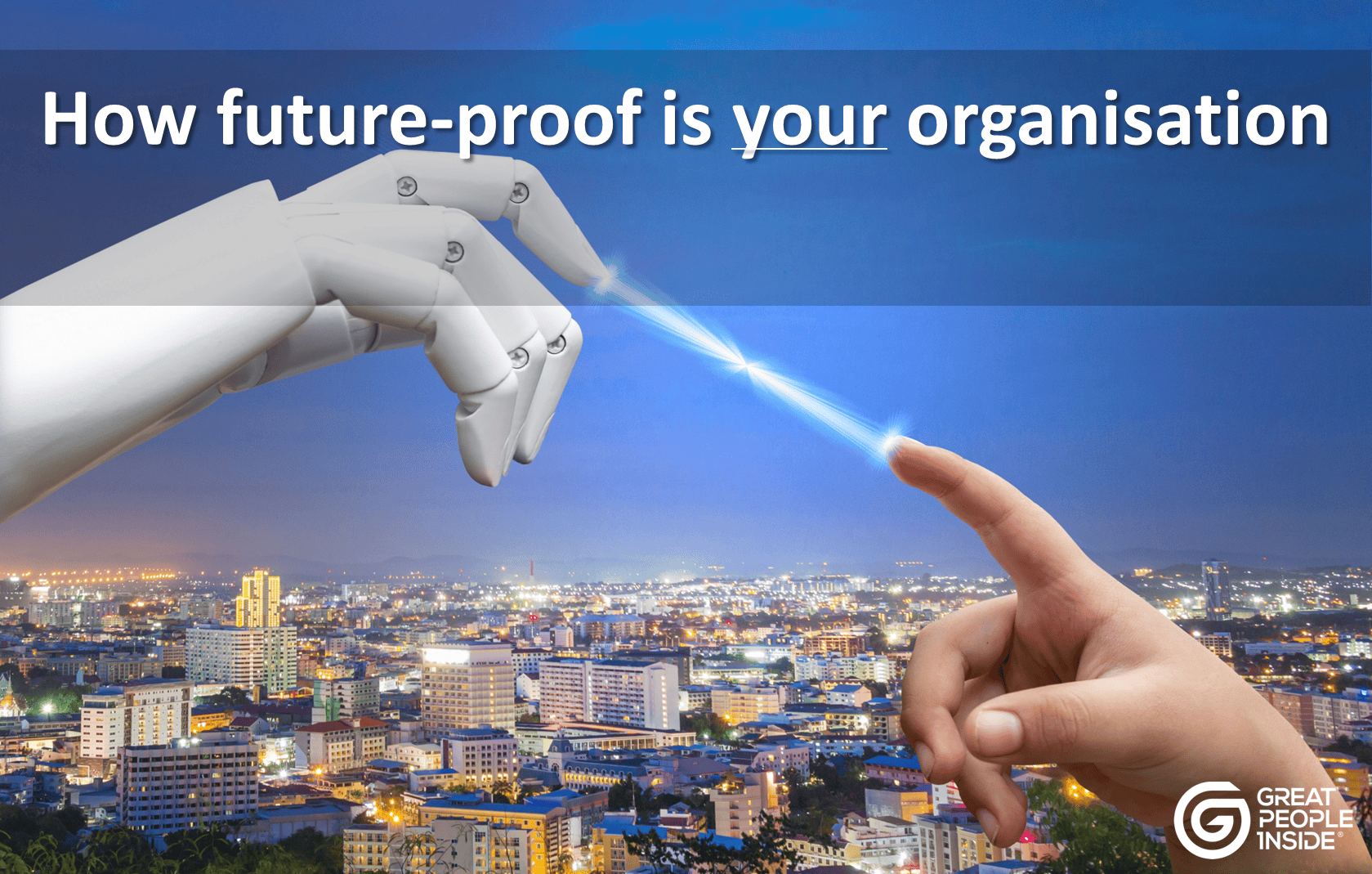
An uncomfortable truth has emerged from the last few ‘roller coaster’ years – we’ve lost the ability (if we ever had it) to predict the future.
None of the self-proclaimed “future of work” experts foresaw events such as (and this is NOT an exhaustive list):
- The negative impact of Brexit (and the unwillingness of political parties to admit/adapt to them).
- Covid-19 and the successful hijacking of the world economy by China
- The Ukraine war and its impact on energy prices
- The Hamas attack on Israel and the resulting conflict
- A second Trump Presidency, tariffs and America First policies
- The ongoing home/hybrid/office debate/conflict
Each of these events has had an impact on how organisations operate – often changing things overnight – and each revealed how fragile our assumptions about the future can be. Worse still, we have no idea what else is coming down the track and how quickly.
At the Davos World Economic Summit in 2018, Justin Trudeau (then Prime Minister of Canada) said “The pace of change has never been this fast and yet it will never be this slow again.” Seven years later, it’s as valid as it was then – and no one’s said it better or more succinctly.
The Certainty of Uncertainty
The reality is simple: we don’t know what will happen next. But we can be sure that this kind of disruption will continue and successful organisations will be those that respond quickly, whatever happens.
This recognition can be pretty frightening. If we can’t predict the future, how can we prepare for it? It’s tempting to throw up our hands and say “We’re screwed!” Yet there is a way forward—and it starts with people. “Adaptability” needs to become a core competence—not just for leaders but for every person in the business.
The Human Equation
As an assessment provider, it’s pretty predictable that we would say success comes down to people – but it’s true. The people you already have and manage to retain, combined with the people you recruit, equal the capability your organisation has to navigate change. Together, they determine whether you survive and thrive or stumble and fall by the wayside.
The People You Have + The People You Recruit = Your Future (or lack of it)
The future of your business is not written in economic forecasts or political polls. It’s written in the adaptability, curiosity, resilience and vision of your workforce. But to build that workforce, first you need to understand where you are today.
Start With a Health Check
No organisation starts with a clean sheet of paper. Every company carries the legacy of past decisions, recruitments and structures. Before you can plan for the future, you need to undertake a ‘health check’ – an honest assessment of your current strengths and where the gaps are. Once you know where you’re vulnerable, you can develop in those areas or recruit to help you plug the gaps.
And here’s the good news: you can do it yourself. No expensive consultants or the major drain of a project team using up limited resources. With the right assessment tools, you can map your existing capabilities and identify what’s missing before you do anything.
Yesterday’s Tools Won’t Solve Tomorrow’s Problems
You can’t solve tomorrow’s problems with yesterday’s tools. The workplace is evolving too quickly for that. As Abraham Maslow famously said, “If the only tool you have is a hammer, you tend to see every problem as a nail.”
Tomorrow’s challenges demand tomorrow’s tools—ones that reveal not just what a person can do now, but how they’re likely to perform when faced with change, uncertainty and new expectations. If you didn’t measure that element when they joined you (the best time) NOW is the second-best time to do it.
What to Measure – and Why
When assessing your existing workforce, and potential recruits, most organisations measure technical competence or past performance. But what if the role changes next year – or next month? What if new technologies or economic pressures shift what “good” looks like?
Forward-thinking organisations are already expanding their assessment capability to include ‘aspirational’ qualities that predict adaptability and resilience. These could include:
- Flexibility and openness to experience – Can this person embrace change rather than resist it?
- Curiosity and self-awareness – Are they willing to learn new ways of working and unlearn/discard the outdated ones?
- Vision and initiative – Do they anticipate challenges or wait for instructions?
- Ability to work across generations and perspectives – Can they collaborate in diverse, hybrid teams?
- VUCA competence – Do they function effectively amid the Volatility, Uncertainty, Complexity, and Ambiguity of the modern workplace?
When your assessments measure these deeper attributes, you gain insights not only into who fits your organisation today, but who will thrive in it tomorrow.
The Myths That Hold Organisations Back
Why aren’t more organisations doing this? Typically, the excuses fall into four categories:
1. It’s too expensive.
Even if it was expensive – and it doesn’t have to be – the alternative is far worse. When a new junior employee leaves, it can cost at least £10,000 to replace them. If they stay but underperform, the cost multiplies every year in lost productivity. The higher their seniority, the higher the stakes.
2. It won’t happen to us.
Denial is easy – until the next disruption hits. Many once-stable companies thought they were immune, right up until a crisis forced rapid, unplanned change (or worse, forced them out of business).
We don’t know (they’re not around to ask) but is it just possible that Wilko, Paperchase, Debenhams, House of Fraser, Monarch Airlines, Carillion, Nokia and Blockbuster thought it wouldn’t happen to them (or just didn’t react quickly enough)?
3. We’re too busy filling seats.
Recruitment teams under pressure often prioritise speed over quality. But the short-term relief of “bums on seats” quickly turns into long-term pain when the wrong hires have their impact (or lack of it) on the business.
4. Taking assessments puts candidates off.
The truth? If an assessment filters out applicants who aren’t prepared to engage in the process you decide on, that’s a good thing. They’re probably not the people you want anyway.
Some leaders choose to wait, hoping things will become clearer before doing anything. But as Barack Obama once said, “Change will not come if we wait for some other person or some other time. We are the ones we’ve been waiting for. We are the change that we seek”
Doing Nothing Is the Riskiest Option
Doing nothing is an option but it carries a huge risk. The future won’t wait for you to catch up. Someone in your organisation must take the lead and drive meaningful change—and that someone might as well be you.
Your Three-Step Action Plan
1. Find out where you are today.
Conduct a people and performance audit to uncover the true state of your organisation. Identify strengths, vulnerabilities and skill gaps.
2. Don’t recruit blindly.
Every new hire should fill a specific capability gap identified in your assessment – not just meet generic job requirements.
3. Be the one that drives change.
Culture change starts with individuals willing to act. Don’t wait for permission; you need to lead by example and build your own momentum.
The world of work is changing faster than ever and it WON’T STOP. Technology, demographics and global events will continue to reshape the workplace (as well as our personal lives) in ways none of us can predict. But by focusing on people – understanding them, developing them, and choosing them wisely – you dramatically increase your organisation’s odds of thriving in uncertainty.
At Great People Inside, we believe that powerful insights don’t have to be complicated or expensive. Our assessment tools are designed to be easy to use, customisable, cheap and focused on outcomes. They help organisations measure not just current ability but the human qualities that sustain adaptability—because in the end, ‘one size really doesn’t fit all’.
The future will continue to surprise us. But with the right people, the right data and the right mindset, your organisation won’t just survive it—it will help to shape it.


